Thursday, February 7, 2019

Media of Your Choice (January 2019) (Members' Choices)

Read or Listen To A Book.

Watch A Movie.

Watch A TV Show.

Listen To A Podcast.


This meeting was actually a fun one.  We got to learn a lot from each other and our choices. There were some that couldn't make due to prior obligations.  But, we found out their choices and I thought it would be fun to post them here.
 
Amber Campbell: Full Measure with Sharyl Attkinson - The Vaccination Debate.
Today we investigate one of the biggest medical controversies of our time: vaccines. There’s little dispute about this much-- vaccines save many lives, and rarely, they injure or kill. A special federal vaccine court has paid out billions for injuries from brain damage to death. But not for the form of brain injury we call autism. Now—we have remarkable new information: a respected pro-vaccine medical expert used by the federal government to debunk the vaccine-autism link, says vaccines can cause autism after all. He claims he told that to government officials long ago, but they kept it secret.
---------
Full Measure is a weekly Sunday news program focusing on investigative, original and accountability reporting. The host is Sharyl Attkisson, five-time Emmy Award winner and recipient of the Edward R. Murrow award for investigative reporting. She is backed by a team of award winning journalists.
 
SaraBeth Nye: A Delectable Education Podcast
Through weekly conversations, three moms who have studied the Charlotte Mason method of education and put her ideas into practice in their homes join together to share with one another for the benefit of listeners by giving explanations of Mason's principles and examples of those principles put into practice out of their own teaching experience. These short discussions aim at providing information, support, and encouragement for others by unfolding the myriad aspects.
 
 
Jamie West: Mrs. Lincoln's Dressmaker by Jennifer Chiaverini
In Mrs. Lincoln’s Dressmaker, novelist Jennifer Chiaverini presents a stunning account of the friendship that blossomed between Mary Todd Lincoln and her seamstress, Elizabeth “Lizzie” Keckley, a former slave who gained her professional reputation in Washington, D.C. by outfitting the city’s elite. Keckley made history by sewing for First Lady Mary Todd Lincoln within the White House, a trusted witness to many private moments between the President and his wife, two of the most compelling figures in American history.

In March 1861, Mrs. Lincoln chose Keckley from among a number of applicants to be her personal “modiste,” responsible not only for creating the First Lady’s gowns, but also for dressing Mrs. Lincoln in the beautiful attire Keckley had fashioned. The relationship between the two women quickly evolved, as Keckley was drawn into the intimate life of the Lincoln family, supporting Mary Todd Lincoln in the loss of first her son, and then her husband to the assassination that stunned the nation and the world.

Keckley saved scraps from the dozens of gowns she made for Mrs. Lincoln, eventually piecing together a tribute known as the Mary Todd Lincoln Quilt. She also saved memories, which she fashioned into a book, Behind the Scenes: Thirty Years a Slave and Four Years in the White House. Upon its publication, Keckley’s memoir created a scandal that compelled Mary Todd Lincoln to sever all ties with her, but in the decades since, Keckley’s story has languished in the archives. In this impeccably researched, engrossing novel, Chiaverini brings history to life in rich, moving style.
  
 
Video from Sewing With Nancy on PBS where the Author talks about the book.  https://www.pbs.org/video/sewing-with-nancy-nancys-corner-jennifer-chiaverini/
 
A quilt that Elizabeth Keckley made for her friend Mary Todd Lincoln.
Samples of Elizabeth Keckley's designs for Mary Todd Lincoln.
 
Laura Baumgarten: She writes stories and blogs.  Her blog is www.gartenwakefulness.wordpress.com.
 
Melissa Sparks: Saints 1815-1846 The Standard Of Truth by The Church of Jesus Christ of Latter-day Saints
 
Saints: The Story of the Church of Jesus Christ in the Latter Days presents the inspiring true story of the women and men who dedicated their lives to establishing The Church of Jesus Christ of Latter-day Saints across the world. Unlike past histories, which were primarily written as reference works, Saints is written as a narrative that is engaging to read.
“Saints is a different kind of history,” said Ben Godfrey, product manager for the Saints project. “Instead of a dry recitation of the facts, Saints relates the events through the eyes of the people who lived them. The result is fast-paced and enjoyable to read.”
Saints is also a multilayered history that allows readers to explore topics in depth with links to explanatory topics and the primary sources behind the text. It is based on decades of rigorous research. Every event, character, and statement is supported by historical sources. There is no historical fiction here, the history’s writers and editors say.
The explanatory Church History Topics provide detail that goes beyond the narrative. Each article has links to additional reading and trustworthy supporting sources. Readers will find links to the topic articles in the footnotes in Saints, or they can find them in the Church History section of the Gospel Library app or by visiting saints.lds.org.
Elder Steven E. Snow, Church Historian and Recorder and a General Authority Seventy, explained that “Saints was prepared in response to the Lord’s commandment to ‘keep the church record and history continually’ (Doctrine and Covenants 47:3).”
Cover of the first volume of Saints.
Speaking of the importance of Saints today, especially for younger generations of Church members, Elder Quentin L. Cook of the Quorum of the Twelve Apostles said, “The young adults of the Church are truly remarkable. They face important life decisions during a time when Satan is raging in the hearts of men and women everywhere.
“I believe we will discover that even though times have changed, the same principles that helped the early Church members overcome their trials of faith will be equally valuable for us today.”
Saints illuminates aspects of Church history that have been lesser known or misunderstood. It includes details and context that are important for understanding topics like violence in Missouri and Illinois, plural marriage in the early Church, the Kirtland Safety Society, and many more.
Saints is also a global history, presenting the experiences of women, men, and children involved in important events of the Restoration all over the world.
The first volume in the series, titled The Standard of Truth, covers the period from Joseph Smith’s youth through the dedication of the Nauvoo Temple (1815–1846). It will be available on September 4 in 14 languages digitally and in print in English. Print editions in other languages will follow before the end of the year.

 
Melissa Johnson: Counting Stars by Michele Paige Holmes
 
 2084781
Jane was hoping for a date - maybe even a boyfriend. What she wasn't expecting was Paul Bryant's completely original and sincere pick-up line: Hi. I'm Paul. I have terminal cancer. My wife was killed in a car accident, and I'm looking for a woman to raise my children.


Allison Hess: Harry Potter Series by J.K. Rowley
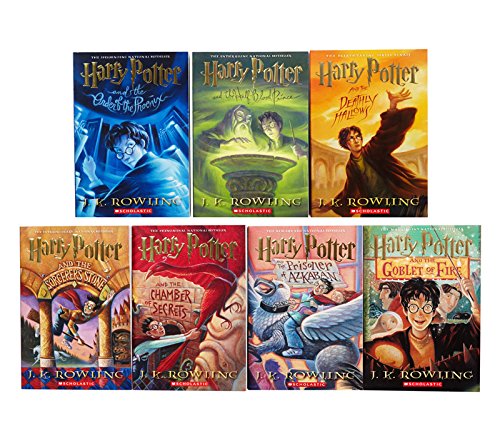
 Image result for harry potter all books
The central character in the series is Harry Potter, a boy who lives in Surrey with his aunt, uncle, and cousin – the Dursleys – and discovers, at the age of eleven, that he is a wizard, though he lives in the ordinary world of non-magical people known as Muggles.[8] The wizarding world exists parallel to the Muggle world, albeit hidden and in secrecy. His magical ability is inborn, and children with such abilities are invited to attend exclusive magic schools that teach the necessary skills to succeed in the wizarding world.[9] Harry becomes a student at Hogwarts School of Witchcraft and Wizardry, a wizarding academy in Scotland, and it is here where most of the events in the series take place. As Harry develops through his adolescence, he learns to overcome the problems that face him: magical, social, and emotional, including ordinary teenage challenges such as friendships, infatuation, romantic relationships, schoolwork and exams, anxiety, depression, stress, and the greater test of preparing himself for the confrontation that lies ahead in wizarding Britain's increasingly-violent second wizarding war.[10]
Each novel chronicles one year in Harry's life[11] during the period from 1991 to 1998.[12] The books also contain many flashbacks, which are frequently experienced by Harry viewing the memories of other characters in a device called a Pensieve.
The environment Rowling created is intimately connected to reality. The British magical community of the Harry Potter books is inspired by 1990s British culture, European folklore, classical mythology and alchemy, incorporating objects and wildlife such as magic wands, magic plants, potions, spells, flying broomsticks, centaurs and other magical creatures, the Deathly Hallows, and the Philosopher's Stone, beside others invented by Rowling. While the fantasy land of Narnia is an alternate universe and the Lord of the Rings' Middle-earth a mythic past, the wizarding world of Harry Potter exists parallel to the real world and contains magical versions of the ordinary elements of everyday life, with the action mostly set in Scotland (Hogwarts), the West Country, Devon, London, and Surrey in southeast England.[13] The world only accessible to wizards and magical beings comprises a fragmented collection of overlooked hidden streets, ancient pubs, lonely country manors, and secluded castles invisible to the Muggle population.
The Harry Potter Rap
 
Tracy White: Girl, Wash Your Face: Stop Believing the Lies about Who You Are So You Can Become Who You Were Meant to Be by Rachel Hollis
 

 Image result for girl wash your face
With wry wit and hard-earned wisdom, popular online personality and founder of TheChicSite.com founder Rachel Hollis helps readers break free from the lies keeping them from the joy-filled and exuberant life they are meant to have.

Founder of the lifestyle website TheChicSite.com and CEO of her own media company, Chic Media, Rachel Hollis has created an online fan base of hundreds of thousands of fans by sharing tips for living a better life while fearlessly revealing the messiness of her own. Now comes her highly anticipated first book featuring her signature combination of honesty, humor, and direct, no-nonsense advice.

Each chapter of Girl, Wash Your Face begins with a specific lie Hollis once believed that left her feeling overwhelmed, unworthy, or ready to give up. As a working mother, a former foster parent, and a woman who has dealt with insecurities about her body and relationships, she speaks with the insight and kindness of a BFF, helping women unpack the limiting mind-sets that destroy their self-confidence and keep them from moving forward.

From her temporary obsession with marrying Matt Damon to a daydream involving hypnotic iguanas to her son's request that she buy a necklace to "be like the other moms," Hollis holds nothing back. With unflinching faith and tenacity, Hollis spurs other women to live with passion and hustle and to awaken their slumbering goals.
 
Rachel Hollis: How To Build Confidence, Believe In Yourself, And Become Your Best Self.
 
Why Did I Write "Girl, Wash Your Face"?


Wednesday, January 2, 2019

Murder on the Orient Express by Agatha Christie (March 2019)

This was the first book that launched our Book Club in January 2018.  Since then we have grown as close friends.  We are happy of what we've become.  We have gotten to know each others from members to close friends. 

We are going to be changing it up a bit.  We'll be watching the movie from 2017 with our husbands as a date night.  Amber Campbell has opened up her home for the event.  At this time it will be announce on when we are having this. You are welcome to read or re-read the book.  This date night with be a dinner and a movie. 

 
Movie / Book Choice for March 2019
Murder on the Orient Express by Agatha Christie (Movie - 2017)
Chosen by Amber Campbell

Summary...

On the book:
What more can a mystery addict desire than a much-loathed murder victim found aboard the luxurious Orient Express with multiple stab wounds, thirteen likely suspects, an incomparably brilliant detective in Hercule Poirot, and the most ingenious crime ever conceived?

Cast from the 2017 Movie (I'm super excited, A LOT of excellent actors):
  • Kenneth Branagh as Hercule Poirot
  • Tom Bateman as Bouc
  • PenĂ©lope Cruz as Pilar Estravados
  • Willem Dafoe as Gerhard Hardman
  • Judi Dench as Princess Dragomiroff
  • Johnny Depp as Edward Ratchett
  • Josh Gad as Hector MacQueen
  • Derek Jacobi as Edward Henry Masterman
  • Leslie Odom Jr. as Dr. Arbuthnot
  • Michelle Pfeiffer as Caroline Hubbard
  • Daisy Ridley as Miss Mary Debenham
  • Marwan Kenzari as Pierre Michel
  • Olivia Colman as Hildegarde Schmidt
  • Lucy Boynton as Countess Helena Andrenyi
  • Manuel Garcia-Rulfo as Biniamino Marquez
  • Sergei Polunin as Count Rudolph Andrenyi

  • Movie Trailer for Murder on the Orient Express 2017.
     
    Murder on the Orient Express full movie 2001.
     
    Audiobook Version.


    The Forgotten Garden by Kate Morton (February 2019)

     
    Book Choice for February 2019
    The Forgotten Garden by Kate Morton
    Chosen by Jamie West

    Summary...

    A foundling, an old book of dark fairy tales, a secret garden, an aristocratic family, a love denied, and a mystery. The Forgotten Garden is a captivating, atmospheric and compulsively readable story of the past, secrets, family and memory from the international best-selling author Kate Morton.

    Cassandra is lost, alone and grieving. Her much loved grandmother, Nell, has just died and Cassandra, her life already shaken by a tragic accident ten years ago, feels like she has lost everything dear to her. But an unexpected and mysterious bequest from Nell turns Cassandra’s life upside down and ends up challenging everything she thought she knew about herself and her family.

    Inheriting a book of dark and intriguing fairytales written by Eliza Makepeace—the Victorian authoress who disappeared mysteriously in the early twentieth century—Cassandra takes her courage in both hands to follow in the footsteps of Nell on a quest to find out the truth about their history, their family and their past; little knowing that in the process, she will also discover a new life for herself.


    Video of Author talking about the book.
     
    Review about the book.


    Note from Jamie West: I found it to be like The Secret Garden by Frances Eliza Hodgson Burnett.  The Secret Garden is a public domain book and it's free to read.

    Audiobook version of The Secret Garden.
     
    The Secret Garden Movie in 1987.


    Monday, December 31, 2018

    Media Of Your Choice (January 2019)

    Read Or Listen To A Book Of Your Choice

    Watch A Movie Of Your Choice

    Watch A TV Show Of Your Choice

    Listen To A Podcast Of Your Choice


    Media Choice for January 2019
    Your Choice
    Chosen by The Book Club
     
    Note...
     
    We each get a few minutes to discuss the Media of our choice.  Book Reports and Dioramas are greatly appreciated. :)!
     
     
    I want to share a few of my favorites from each category for ideas.
     
     
    Books:
    The Swans of Fifth Avenue by Melanie Benjamin
    The Martian by Andy Weir
    The Art Forger by B.A. Shapiro
    Shanghai Girls by Lisa See 
    Delirium by Lauren Oliver
    (I have a much-much longer list)
     
    Movies:
    Lost in Translation
    The Martian
    Airplane!
    Caddyshack
    Wonder Woman
    (Again, I have a much longer list)
     
    TV Shows:
    Lost
    The Walking Dead
    Riverdale
    Man in the High Castle
    Superstore
    (I also have a much-much longer list)
     
    Podcasts:
    Things I Missed In History Class
    Cold (This is about the Susan Powell case. This is an independent investigation by Dave Cawley of KSL Newsradio.  It includes diary entries from Susan and Josh Powell and interviews from family, friends and co-workers.)
    NPR Fresh Air by Terry Gross
    Crafting & Coffee with Amy Latta
    Sewing Out Loud
    The Moth (There is some language by it's people telling stories about things that happened in their lives and situations. There's varieties funny, sad and human stories).
    LibriVox (This is a podcast that independent readers record public domain audiobooks like Frankenstein,  Sherlock Holmes, Pride and Prejudice, Anne of Green Gables, etc.  People donate their voice to read theses wonderful written works of art.)
    (Also, I have a longer list) :)
     
    Good Luck!!!


    Tuesday, July 31, 2018

    Man's Search For Meaning by Viktor Frankl (November 2018)


    Book Choice for November 2018
    Man's Search For Meaning by Viktor E. Frankl
    Chosen by Laura Baumgarten

    Summary...

    Psychiatrist Viktor Frankl's memoir has riveted generations of readers with its descriptions of life in Nazi death camps and its lessons for spiritual survival. Between 1942 and 1945 Frankl labored in four different camps, including Auschwitz, while his parents, brother, and pregnant wife perished. Based on his own experience and the experiences of others he treated later in his practice, Frankl argues that we cannot avoid suffering but we can choose how to cope with it, find meaning in it, and move forward with renewed purpose. Frankl's theory-known as logotherapy, from the Greek word logos ("meaning")-holds that our primary drive in life is not pleasure, as Freud maintained, but the discovery and pursuit of what we personally find meaningful.

    At the time of Frankl's death in 1997, Man's Search for Meaning had sold more than 10 million copies in twenty-four languages. A 1991 reader survey for the Library of Congress that asked readers to name a "book that made a difference in your life" found Man's Search for Meaning among the ten most influential books in America.

    Discussion Questions 
    1. What do you think Frankl’s views of religion are and how are these reflected through his experiences and/or theories?
    2. Throughout the book, particularly Part One, Frankl does not identify himself as Jewish. Why do you think this is?
    3. Explain Frankl’s theory of success. Do you agree or disagree with him?
    4. What is "barbed wire sickness" (p. 7)?
    5. What is the significance of Frankl’s reasons for staying in Austria?
    6. Identify some "‘Frankl-isms"that you find inspirational or with which you identify.
    7. According to Frankl, “An abnormal reaction to an abnormal situation is normal.” What is does he mean by this paradox? How can you relate it to a time in your own life?
    8. What is the "ultimate freedom" according to Frankl?
    9. Frankl says that to be alive in the camp meant that one had lost his scruples: "The best of us did not return." What does he mean by this? How does the statement reflect life in the concentration camps during the Holocaust?
    10. Why do you think that cigarettes and smoking were the last pleasures enjoyed before death? Why or how would they signal imminent death to other prisoners?
    11. What were the "phase 1" reactions following entry into the concentration camp scene? What were the "“phase 2" reactions to being well-entrenched in the concentration camp routine?
    12. What were the "phase 3" reactions to being released and liberated from a concentration camp? Explain your understanding of the gradual shift in reactions.
    13. What do you think Frankl’s definition of love is? Does it fit into Frankl’s philosophy of existentialism?
    14. How does Frankl’s wife give his life meaning?
    15. Read pp. 37–41 passage about Frankl’s wife. How do these passages explain or exemplify the separation of the mind from the body?
    Read p. 29 passage. Compare and contrast to this famous passage from Elie Wiesel’s Night:
    Never shall I forget that night, the first night in camp, which has turned my life into one long night, seven times cursed and seven times sealed. Never shall I forget that smoke. Never shall I forget the little faces of the children, whose bodies I saw turned into wreaths of smoke beneath a silent blue sky. Never shall I forget those flames which consumed my faith forever. Never shall I forget that nocturnal silence which deprived me, for all eternity, of the desire to live. Never shall I forget those moments which murdered my God and my soul and turned my dreams to dust. Never shall I forget these things, even if I am condemned to live as long as God Himself. Never.
    16. Talk about the passage on pp. 86–87 that questions the over-simplification of decent vs. indecent or good vs. evil among human beings in the Holocaust.
    17. According to Frankl, how do suffering and death complete life and give it meaning?
    18. Twice Frankl mentions the fear that "we were heading to Mauthausen." What does he mean?
    19. What is Frankl’s advice to the hut/block for staying alive?
    20. Explain how responsibility is a crucial component of logotherapy?
    21. How does Frankl explain survival in the camps with regard to logotherapy?
    22. Do you agree or disagree with Frankl that " mass neurotic syndrome" is pervasive in the young generation of today? How can it be combated through logotherapy then?
    23. Regarding the movie analogy on p. 143: Discuss the relevance/analogy of this passage to your own life. Do you think that the movie analogy is a good example for Frankl’s view of existentialism?
    24. How do you know if or when any single situation or event in your life has been actualized? How does this movie analogy force you to reflect upon your own life?
    25. According to Frankl, what are the three main avenues for reaching meaning in life?
     
    Wikipedia Article about Viktor Frankl
    

    Audiobook Version of Man's Search For Meaning by Viktor Frankl
     
    Book Summary
     
    Interview with the Viktor Frankl
     
     
    Another Video on Viktor Frankl
     
    Picture of him and his family.
     
    Wikipedia Article of Auschwitz
     
     Tour of Auschwitz Concentration Camp


    Tuesday, May 29, 2018

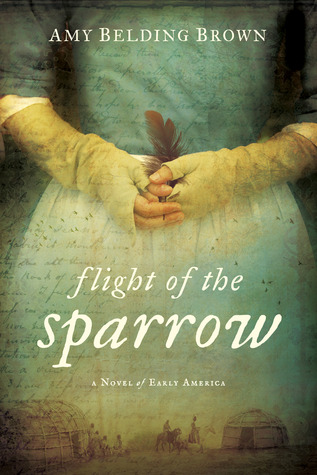
    Flight of the Sparrow:A Novel of Early America by Amy Belding Brown (October 2018)


    Book Choice for October 2018
    Flight of the Sparrow: ANovel of Early America by Amy Belding Brown
    Chosen by Sarah Beth Nye

    Summary...
    She suspects that she has changed too much to ever fit easily into English society again. The wilderness has now become her home. She can interpret the cries of birds. She has seen vistas that have stolen away her breath. She has learned to live in a new, free way.... 

    Massachusetts Bay Colony, 1676. Even before Mary Rowlandson is captured by Indians on a winter day of violence and terror, she sometimes found herself in conflict with her rigid Puritan community. Now, her home destroyed, her children lost to her, she has been sold into the service of a powerful woman tribal leader, made a pawn in the on-going bloody struggle between English settlers and native people. Battling cold, hunger, and exhaustion, Mary witnesses harrowing brutality but also unexpected kindness. To her confused surprise, she is drawn to her captors’ open and straightforward way of life, a feeling further complicated by her attraction to a generous, protective English-speaking native known as James Printer. All her life, Mary has been taught to fear God, submit to her husband, and abhor Indians. Now, having lived on the other side of the forest, she begins to question the edicts that have guided her, torn between the life she knew and the wisdom the natives have shown her.

    Based on the compelling true narrative of Mary Rowlandson, Flight of the Sparrow is an evocative tale that transports the reader to a little-known time in early America and explores the real meaning of freedom, faith, and acceptance.


    Questions for Discussion

    1. What was your overall response to the novel? What did you feel? What did you learn? 
    
    2. Discuss Mary Rowlandson’s relationships with the three men in her life—Joseph, James, and Samuel. 
    What does she give and what does she receive from each relationship?
    ​
    3. Mary Rowlandson lives in a society ruled by men in which women were allowed few of the freedoms that we take for granted today. Identify those constraints, discuss how they might have helped or hurt the Bay Colony’s survival, and discuss how women might have found meaning in life despite them.

    ​4. As an Indian captive, Mary feels freed from the constraint of “mutual watch,” the “relentless scrutiny of each other’s conduct required of all church members.” Discuss the idea of mutual watch as it plays out in the novel, and what it might be like to live under such a system. Can you think of any modern-day equivalents?

    5. Mary experiences both cruelty and kindness at the hands of her Indian captors. Compare their behavior toward her to the cruelty and kindness shown her by her husband, Joseph, and other members of English society.

    6. Discuss the various forms that freedom and imprisonment take in the novel. What role does the sparrowplay in the author’s exploration of those ideas?

    7. While living with the Indians Mary begins to find beauty, peace, and sacred mystery in the wilderness. How does she initially view the natural world and what inspires this change? Compare her experience of the natural world to your own.

    8. Mary becomes convinced that slavery and physically punishing her children are wrong, and she stands up to her husband Joseph on these issues. What makes her so sure she is correct to reject them? Is mere conviction enough, or is something else required?

    9. James Printer tells Mary, “We have both bought our redemption at a terrible price.” And Mary realizes that she felt redeemed when she followed the promptings of her heart. Discuss the many meanings of redemption in the novel.

    10. The Puritan worldview differs markedly from our own. Discuss their beliefs as they relate to God’s love and punishment, child rearing, grief, the infectious nature of sin, slavery, obedience to authority, and salvation. In what ways are these ideas still part of current thought and practice? In what ways have our thinking changed?

    11. Because their exposure to another culture has changed their beliefs and perceptions, both Mary and James feel estranged from their original people. Have you ever felt estranged from your own “group of origin”? Care to share your experience?

    12. Have you read other “captivity narratives,” either those from previous centuries or those written by recent, contemporary captives (such as Elizabeth Smart and Jaycee Dugard)? How do they compare with Mary Rowlandson’s story?

    13. What do you most admire about Mary? What makes her story relevant today?

    14. What do you hope to remember about this novel six months or a year from now? Do you think that some part of it will remain with you for even longer than that?    


    Interview with the Author Amy Belding Brown.
     
    Author's Website
     
     ~~~~~~~~~~~~~~~~~~~~~~~~~~~~~~~~~~~~~~~~~~~~~~~~~~~~~~~~~~~~~~~~~~~~~~~~~~~~~~


    Information and links about the Mary Rowlandson


     Narrative of the Captivity and Restoration of Mrs. Mary Rowlandson. Story is her   
    
     own words.  This is close to the Flight of the Sparrow.  Audiobook version!!!
     
     
    A Narrative of the Captivity and Restoration of Mrs. Mary Rowlandson in her own words.
     
     
    Wikipedia Article about Mary Rowlandson


    Stargirl by Jerry Spinelli (September 2018)


    Book Choice for Septenber 2018
    Stargirl by Jerry Spinelli
    Chosen by Allison Hess

    Summary...

    A celebration of nonconformity; a tense, emotional tale about the fleeting, cruel nature of popularity--and the thrill and inspiration of first love. Ages 12+

    Leo Borlock follows the unspoken rule at Mica Area High School: don't stand out--under any circumstances! Then Stargirl arrives at Mica High and everything changes--for Leo and for the entire school. After 15 years of home schooling, Stargirl bursts into tenth grade in an explosion of color and a clatter of ukulele music, enchanting the Mica student body.

    But the delicate scales of popularity suddenly shift, and Stargirl is shunned for everything that makes her different. Somewhere in the midst of Stargirl's arrival and rise and fall, normal Leo Borlock has tumbled into love with her.

    In a celebration of nonconformity, Jerry Spinelli weaves a tense, emotional tale about the fleeting, cruel nature of popularity--and the thrill and inspiration of first love.


    Audiobook version of Stargirl, (No really, it's the picture of the cover of the sequel Love, Stargirl.  I had to check and make it was the right book).
     
    Book Report Fan Made Book Trailer


    Literature Circle Questions
     
    Use the questions and activities that follow to get more out of the experience of
    reading Stargirl by Jerry Spinelli
    1. When Stargirl arrives at Mica High School, people notive her. Name three ways

    in which her appearance or behavior differs from that of other students.

    2. By December first of the year, Stargirl has become the most popular person in

    school. Describe what other students do to show admirations for her.

    3. Think about the setting of the story, which takes place in an Arizona desert

    community. Identify passages that help you “see” the plants, animals, terrain, and

    climate in Leo’s town.

    4. Archie is a mentor and friend to Leo and other kids in the neighborhoods. Cite

    examples from the book that show how Archie helps one of the main characters.

    5. Identify a character in the story who shows courage. Explain how the character is

    brave.

    6. What does Archie mean when he says, “When Stargirl cries, she does not shed

    tears, but light”?

    7. What questions would you ask Leo if you interviewed him as an adult?

    8. Stargirl notices and cares about bad things that happen to other people but often

    seems to be unaware of bad things that happen to herself. If she were to visit your

    school today, what would she notice? What would she ignore? Give reasons for

    your answers.

    9. Over the course of the book, Leo changes. Compare and contrast Leo’s

    appreciation of “little things” in life at the beginning of the novel and at the end.

    10. When Archie and Leo drive out to the desert, Archie write a single word on a

    scrap of paper and stuffs it in a hole. What do you think is written on the paper?

    11. Create a new scene for the book in which the two discuss Archie’s message.

    12. When Leo returns to Arizona after living in the East, someone else is living in

    Archie’s house. Where, in your opinion, is Archie? How does that fit with

    Archie’s view of the universe?

    13. Toward the end of the book, Leo chooses membership in his peer group over his

    affection for Stargirl. What is your opinion of Leo’s choice? Why?

    14. Do you think Leo’s life is improved for having been involved with Stargirl? What

    makes you say that?
    Note: The following questions are keyed to Bloom’s Taxonomy: Knowledge: 1-3;


    Comprehension: 4-6; Application 7-8; Analysis 9; Synthesis; 10-11; Evaluation 12-13.
     
    Activities
     
     
    1. Stargirl and Leo have fun playing a “greeting card” game: After reading an

    advertisement on a bulletin board (“Odd Jobs-Ask for Mike”), they decide what

    that person most needs and create a card, such as a Keep-your-chin up card.

    Carefully observe a stranger for 10 minutes. Create a greeting card that he or she

    needs.

    2. Stargirl won the state’s public speaking contest. Prepare a short speech for an

    oratorical contest on a topic such as Have the Courage to Be Yourself. Outline

    your speech on note cards. Visualize yourself winning the contest. Then deliver

    your speech to the group.

    3. Create a time line of major events in Leo’s life, including his age at the time and

    short description of the milestone. Project the time line into Leo’s future, after the

    book has ended. Present your work to your group and discuss.
     

    Tuesday, April 17, 2018

    Olive Kitteridge by Elizabeth Strout (August 2018)

     
    Book Choice for August 2018
    Olive Kitteridge by Elizabeth Strout
    Chosen by Jamie West
     
    Summary....
     
    Winner of the Pulitzer Prize, Olive Kitteridge offers profound insights into the human condition – its conflicts, its tragedies and joys, and the endurance it requires.

    At times stern, at other times patient, at times perceptive, at other times in sad denial, Olive Kitteridge, a retired schoolteacher, deplores the changes in her little town of Crosby, Maine, and in the world at large, but she doesn’t always recognize the changes in those around her: a lounge musician haunted by a past romance; a former student who has lost the will to live; Olive’s own adult child, who feels tyrannized by her irrational sensitivities; and her husband, Henry, who finds his loyalty to his marriage both a blessing and a curse.

    As the townspeople grapple with their problems, mild and dire, Olive is brought to a deeper understanding of herself and her life – sometimes painfully, but always with ruthless honesty. Olive Kitteridge offers profound insights into the human condition – its conflicts, its tragedies and joys, and the endurance it requires.
     

    Questions for Discussion

    Olive Kitteridge

    1. Do you like Olive Kitteridge as a person?
    2. Have you ever met anyone like Olive Kitteridge, and if so, what similarities do you see between that person and Olive?
    3. How would you say Olive changed as a person during the course of the book?
    4. Discuss the theme of suicide. Which characters are most affected (or fascinated) by the idea of killing themselves?
    5. What freedoms do the residents of Crosby, Maine, experience in contrast with those who flee the town for bigger “ponds” (California, New York)? Does anyone feel trapped in Crosby, and if so, who? What outlets for escape are available to them? 
    6. Why does Henry tolerate Olive as much as he does, catering to her, agreeing with her, staying even-keeled when she rants and raves? Is there anyone that you tolerate despite their sometimes overbearing behavior? If so, why?
    7. How does Kevin (in “Incoming Tide”) typify a child craving his father’s approval? Are his behaviors and mannerisms any way like those of Christopher Kitteridge? Do you think Olive reminds Kevin more of his mother or of his father?
    8. In “A Little Burst,” why do you think Olive is so keen on having a positive relationship with Suzanne, whom she obviously dislikes? How is this a reflection of how she treats other people in town?
    9. Does it seem fitting to you that Olive would not respond while others ridiculed her body and her choice of clothing at Christopher and Suzanne’s wedding?
    10. How do you think Olive perceives boundaries and possessiveness, especially in regard to relationships?
    11. Elizabeth Strout writes, “The appetites of the body were private battles” (“Starving,” page 89). In what ways is this true? Are there “appetites” that could be described as battles waged in public? Which ones, and why
    12. Why does Nina elicit such a strong reaction from Olive in “Starving”? What does Olive notice that moves her to tears in public? Why did witnessing this scene turn Harmon away from Bonnie?
    13. In “A Different Road,” Strout writes about Olive and Henry: “No, they would never get over that night because they had said things that altered how they saw each other” (p. 124). What is it that Olive and Henry say to each other while being held hostage in the hospital bathroom that has this effect? Have you experienced a moment like this in one of your close relationships?
    14. In “Tulips” and in “Basket of Trips,” Olive visits people in difficult circumstances (Henry in the convalescent home, and Marlene Bonney at her husband’s funeral) in hopes that “in the presence of someone else’s sorrow, a tiny crack of light would somehow come through her own dark encasement” (p. 172). In what ways do the tragedies of others shine light on Olive’s trials with Christopher’s departure and Henry’s illness? How do those experiences change Olive’s interactions with others? Is she more compassionate or more indifferent? Is she more approachable or more guarded? Is she more hopeful or more pessimistic?
    15. In “Ship in a Bottle,” Julie is jilted by her fiancĂ©, Bruce, on her wedding day. Julie’s mother, Anita, furious at Bruce’s betrayal, shoots at him soon after. Julie quotes Olive Kitteridge as having told her seventh-grade class, “Don’t be scared of your hunger. If you’re scared of your hunger, you’ll just be one more ninny like everyone else” (p. 195). What do you think Olive means by this phrase? How does Olive’s life reflect this idea? Who is afraid of his or her hunger in these stories?
    16. In “Security,” do you get the impression that Olive likes Ann, Christopher’s new wife? Why does she excuse Ann’s smoking and drinking while pregnant with Christopher’s first child (and Henry’s first grandchild)? Why does she seem so accepting initially, and what makes her less so as the story goes on?
    17. Was Christopher justified in his fight with Olive in “Security”? Did he kick her out, or did she voluntarily leave? Do you think he and Ann are cruel to Olive?
    18. Do you think Olive is really oblivious to how others see her—especially Christopher? Do you think she found Christopher’s accusations in “Security” shocking or just unexpected?
    19. What’s happened to Rebecca at the end of “Criminal”? Where do you think she goes, and why do you think she feels compelled to go? Do you think she’s satisfied with her life with David? What do you think are the reasons she can’t hold down a job?
    20. What elements of Olive’s personality are revealed in her relationship with Jack Kennison in “River”? How does their interaction reflect changes in her perspective on her son? On the way she treated Henry? On the way she sees the world?


      HBO Miniseries (Trailer)


    ***UPDATED CHANGE FOR NOVEMBER 2019*** Who Discovered America? The Untold History of the Peopling of the Americas by Gavin Menzies and Ian Hudson (November 2019) ***UPDATED***

    November 2019 Who Discovered America? The Untold History of the Peopling of the Americas by Gavin Menzies and Ian Hudson Chosen b...